AI visibility
AI visibility (GEO): make sure ChatGPT and Google get your business right
GEO helps ChatGPT, Gemini and Google understand your business correctly. What is proven, what isn’t, with no promises.
In short
GEO (generative engine optimisation, meaning optimisation for AI engines) covers everything that helps assistants such as ChatGPT, Gemini, Perplexity or Google’s AI-written summaries understand your business, describe it correctly and cite it when they answer a question. It is for tradespeople and SMEs in Luxembourg whose customers are starting to ask an AI their questions. Nobody can promise you will appear in ChatGPT: Wedo Solutions works on what is established, and shows you what the AIs say about you.

What happens when a customer asks an AI
Take a homeowner in Strassen. He asks ChatGPT: “Which landscaper near Strassen can trim a thirty-metre hedge before winter?” The assistant can search the web, read a few pages and answer by naming businesses, with links to the pages it used.
On Google, a similar search can show an AI Overview: a summary written by AI at the top of the results, with links to the pages it drew on. Google says it only shows one when it judges that it adds something beyond the standard results. There is also AI Mode, for asking longer questions and follow-up questions.
In Luxembourg, Google’s AI Overviews and AI Mode are available in French, German and English (AI Overviews in Portuguese too). Not in Luxembourgish.
This is a made-up example: he is not a real client.
For your business, two questions matter:
- does the AI know you, and does it mention you when someone searches for your trade in your area?
- is what it says about you accurate: the right services, the right area, the right opening hours, the right address?
Who it’s for
GEO is relevant to you if:
- your website exists and Google already knows you: GEO builds on that foundation; it doesn’t replace it;
- you want to know what AIs say about your business, and correct what is wrong (old opening hours, old address, work you no longer do);
- your customers plan their work online before calling;
- you want to be ready, without spending money on tricks with nothing to back them up.
If your website still doesn’t show up much on Google, start with SEO: it is the same foundation.
What we do
A baseline check
We ask ChatGPT, Gemini, Perplexity and Google’s AI Mode the questions your customers ask. We note whether they mention you, who they mention instead, and what they say about you.
Open doors
We check that your website doesn’t block the AI crawlers used for search. This is set in the robots.txt file, a small file that tells crawlers what they are allowed to read. We also check that your text is actually in the page sent by the server: according to a Vercel study from late 2024, the ChatGPT and Claude crawlers did not read content that a script displays afterwards in the browser.
Clear answers
A direct answer at the top of each important page, frequently asked questions, precise and dated facts about your work, your areas and your lead times.
Structured data
It tells machines your name, address, opening hours and services, with no room for error. Google states that it is not required for its AI features; it remains useful for SEO.
The same information everywhere
Name, address, phone number, opening hours and services identical on your website, your Google Business Profile, the directories you appear in and your social media. An AI that finds two different addresses can get it wrong.
Being mentioned elsewhere, for real
We advise you on reviews from real customers, published projects and reputable directories. Nothing bought, nothing made up.
In detail
The subject is new and there is a lot of talk about it. Here is where things stand in November 2026, with sources.
| What you hear | What we know |
|---|---|
| “You need a special method for Google’s AI.” | Google says the opposite: there are no additional requirements to appear in AI Overviews or AI Mode. The page must be indexed by Google and eligible to be shown with a snippet. In its guide of 15 May 2026, Google writes that preparing for its AI features is still SEO. |
| “You need an llms.txt file.” | An llms.txt file is a summary of a website, placed on the site for AIs to read. Google ignores it: no special file is needed to appear in its search. An Ahrefs study of June 2026 covering 137,210 websites shows that 97% of these files received no visits at all in May 2026. |
| “You have to cut your text into small chunks for AI.” | Not necessary, according to Google. It advises writing for the people who read you. |
| “AI crawlers must be able to read your website.” | Established. OpenAI states that a site that blocks its search crawler (OAI-SearchBot) does not appear in ChatGPT search answers. Anthropic states that blocking its search crawlers may reduce visibility in Claude. |
| “Being mentioned elsewhere on the web helps.” | Observed, with no proof of cause. A 2025 Ahrefs study of 75,000 brands found that mentions of a brand on the web are far more closely linked to its presence in AI Overviews than links are. This is a correlation: it does not prove that one causes the other. Google warns that chasing fake mentions is pointless. |
| “Figures and sources make a text more likely to be picked up.” | Promising, but still to be confirmed. The academic study called “GEO”, published in 2024, measured up to 40% more visibility in AI answers, mainly by adding quotations, statistics and sources. It is a lab result, obtained on the AIs of 2023 and 2024: treat it as a trend. And the figures must be true. |
| “Structured data is essential for AI.” | No, according to Google: no special markup is required for its AI features. It still recommends structured data for classic SEO. |
A guaranteed place in ChatGPT or in Google’s summaries.
An llms.txt file presented as the answer.
Fake mentions, fake reviews or paid articles.
Text rewritten “for AI” at the expense of your customers, who remain your first readers.
No tool gives a complete picture. Here is what exists in November 2026:
- Google Search Console
(the free tool that shows how your website appears in Google) has a report on AI features: how many times your pages appeared in AI Overviews and AI Mode. It has been open to all websites since 31 August 2026. It counts impressions; clicks are not included.
- Bing Webmaster Tools
Microsoft’s free equivalent, has shown since February 2026 when your pages are cited by Copilot and by Bing’s summaries.
- Your website statistics
show visits coming from chatgpt.com, perplexity.ai or gemini.google.com.
- Manual checks
for ChatGPT and Perplexity, we have not found an equivalent tool. We ask the same questions again and compare.
Method
How it works
1. Baseline check
What we do
We put your customers’ questions to the main assistants and note their answers.
What you do
You tell us the questions your customers ask you on the phone.
2. Fixes
What we do
Crawlers, pages, wrong or duplicate information.
What you do
You check your information: opening hours, area, services, address.
3. Content
What we do
Clear answers, frequently asked questions, Google Business Profile and directories aligned.
What you do
You check the text about your trade, and ask every customer for a review.
4. Follow-up
What we do
We ask the same questions again and look at what has changed.
What you do
You tell us about anything new: new service, new address, new opening hours.
Price and the SME Packages grant
SME Packages Digital
The State grant for SMEs’ digital projects: what it refunds, and for which projects.
All about the grant- Price
It depends on the state of your information online, the fixes needed and the ongoing follow-up. We give you a quote.
- The SME Packages – Digital grant: to be checked together
This state grant reimburses 70% of the eligible costs of a project worth €3,000 to €25,000 excluding VAT. The official page mentions “creating, developing, or improving your website”; it says nothing about AI. We check with you, and at the pre-analysis (the Chamber of Skilled Trades and Crafts for craft businesses, the House of Entrepreneurship for others), whether your project can qualify.
Our work
GEO rests on a solid website and good SEO. Two businesses whose website we built and whose SEO we worked on:
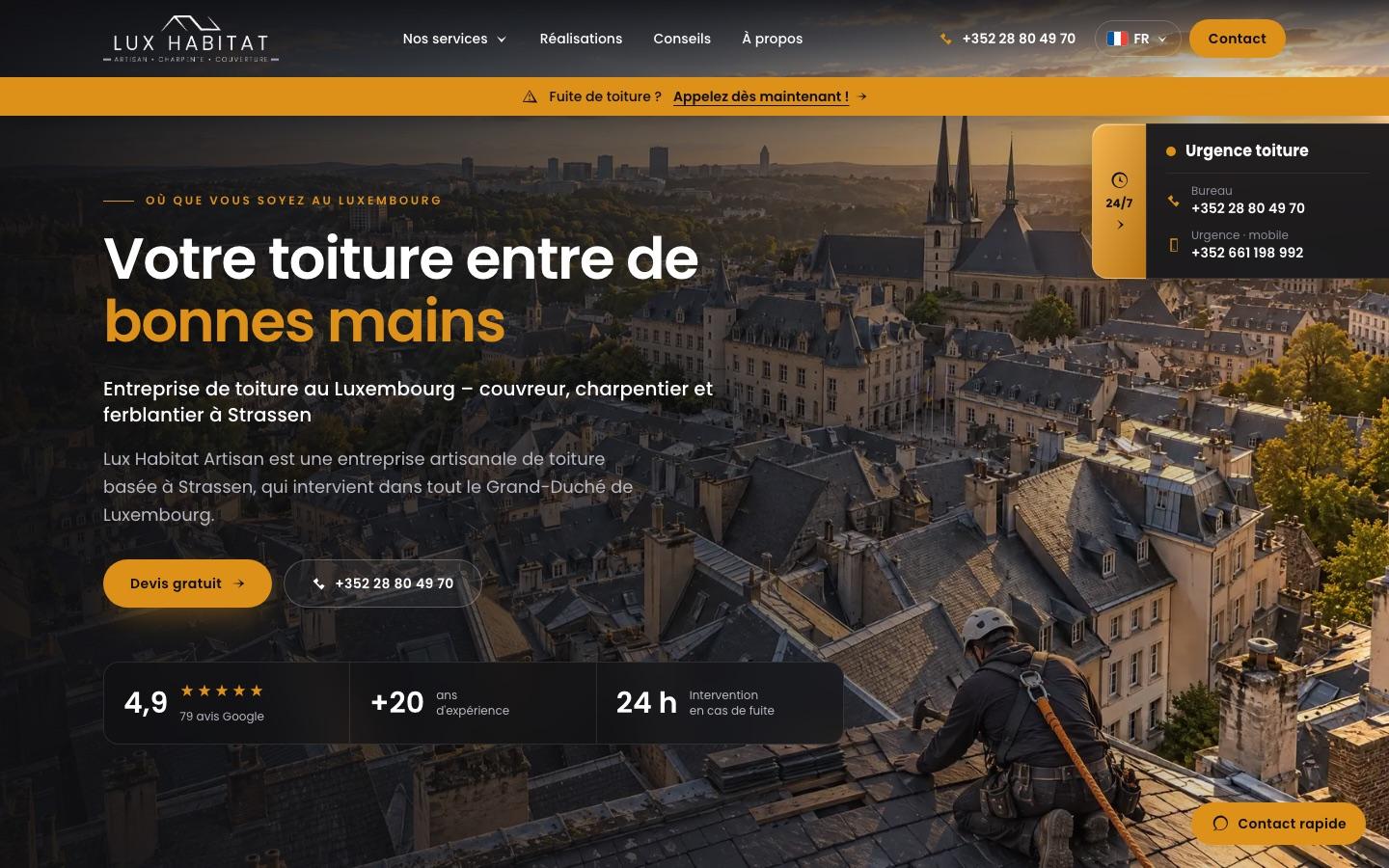
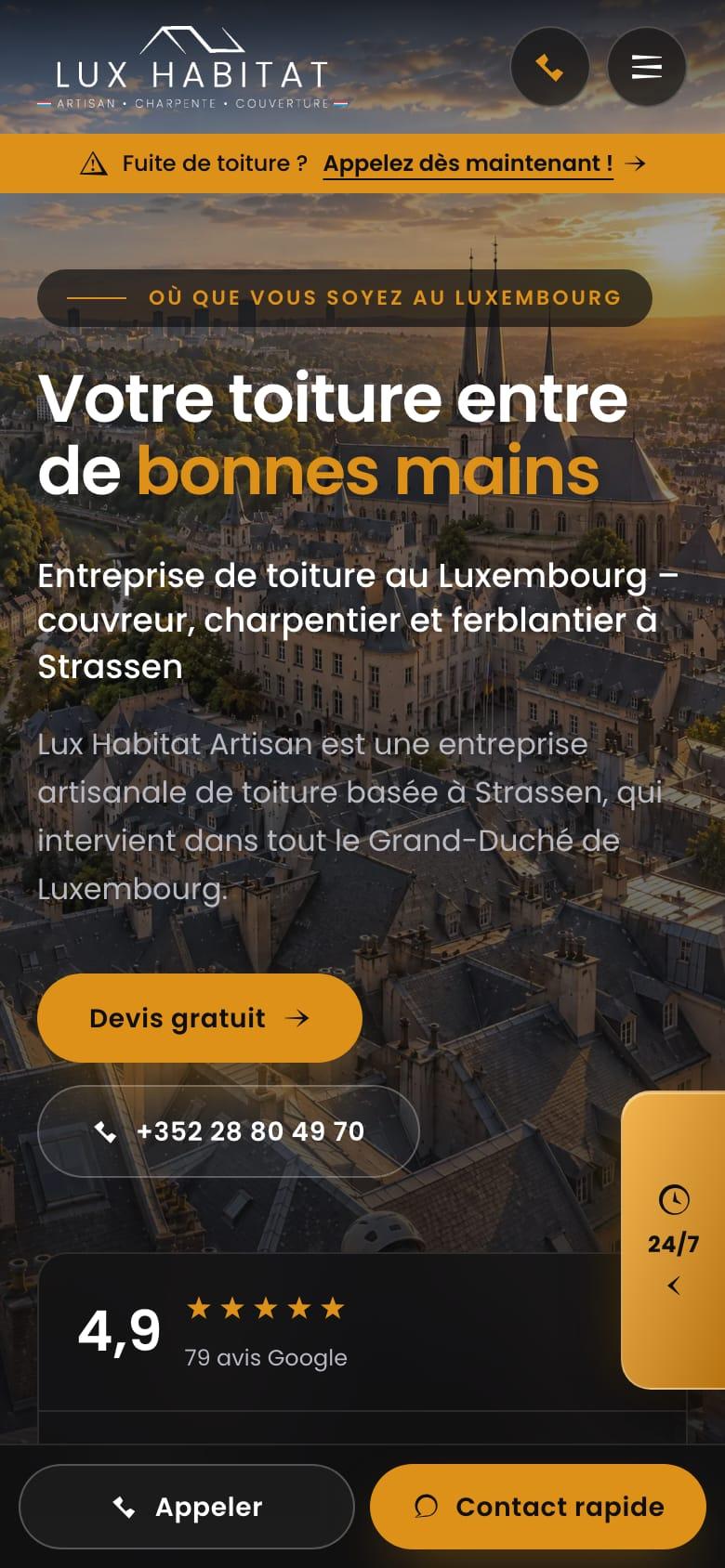
Lux Habitat
roofing, timber framing and zinc work: one page per type of work, with what people search for in the title (“Infiltration et fuites de toiture au Luxembourg”, meaning “Water ingress and roof leaks in Luxembourg”, our translation).
Visit luxhabitat.lu (new tab)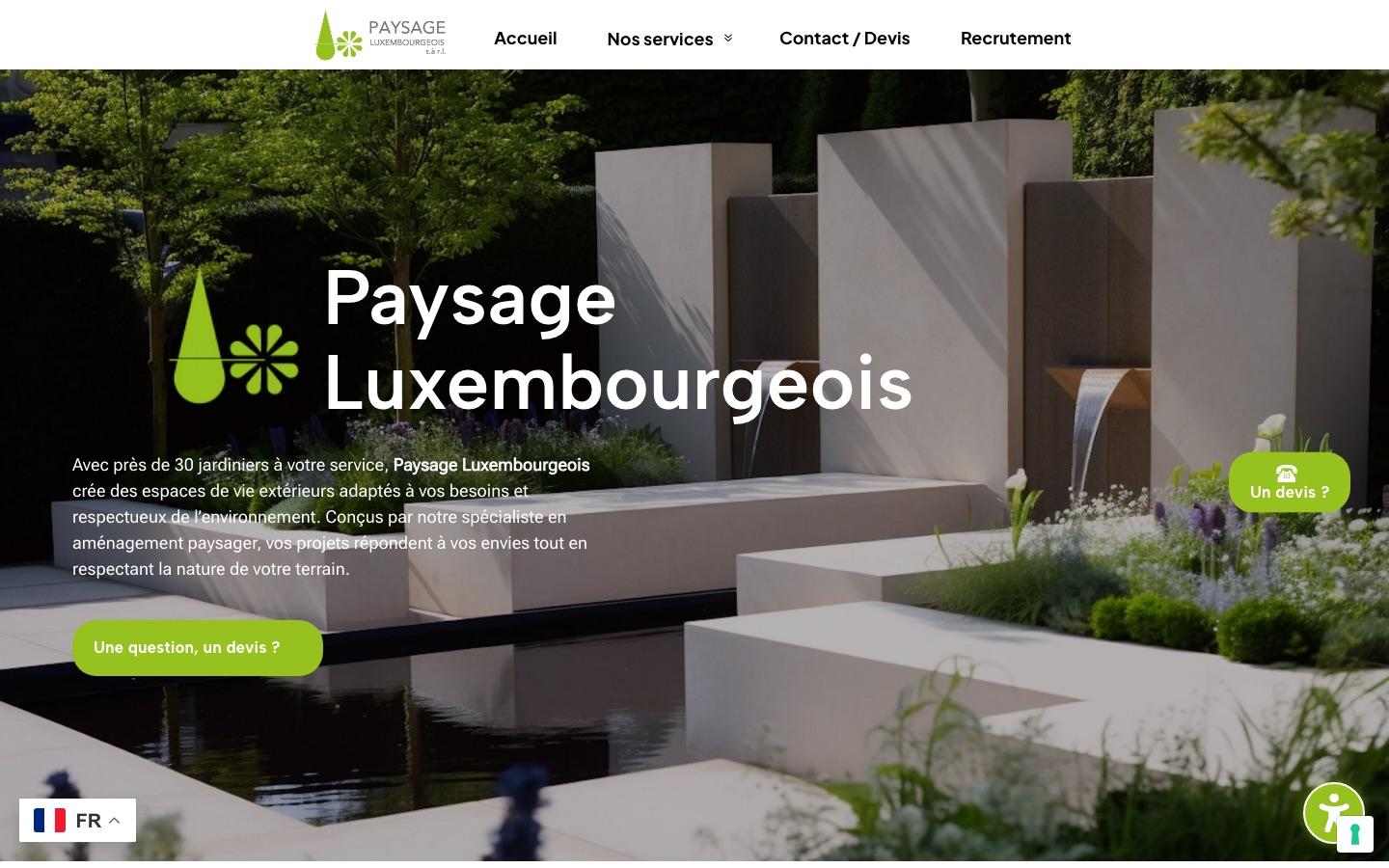
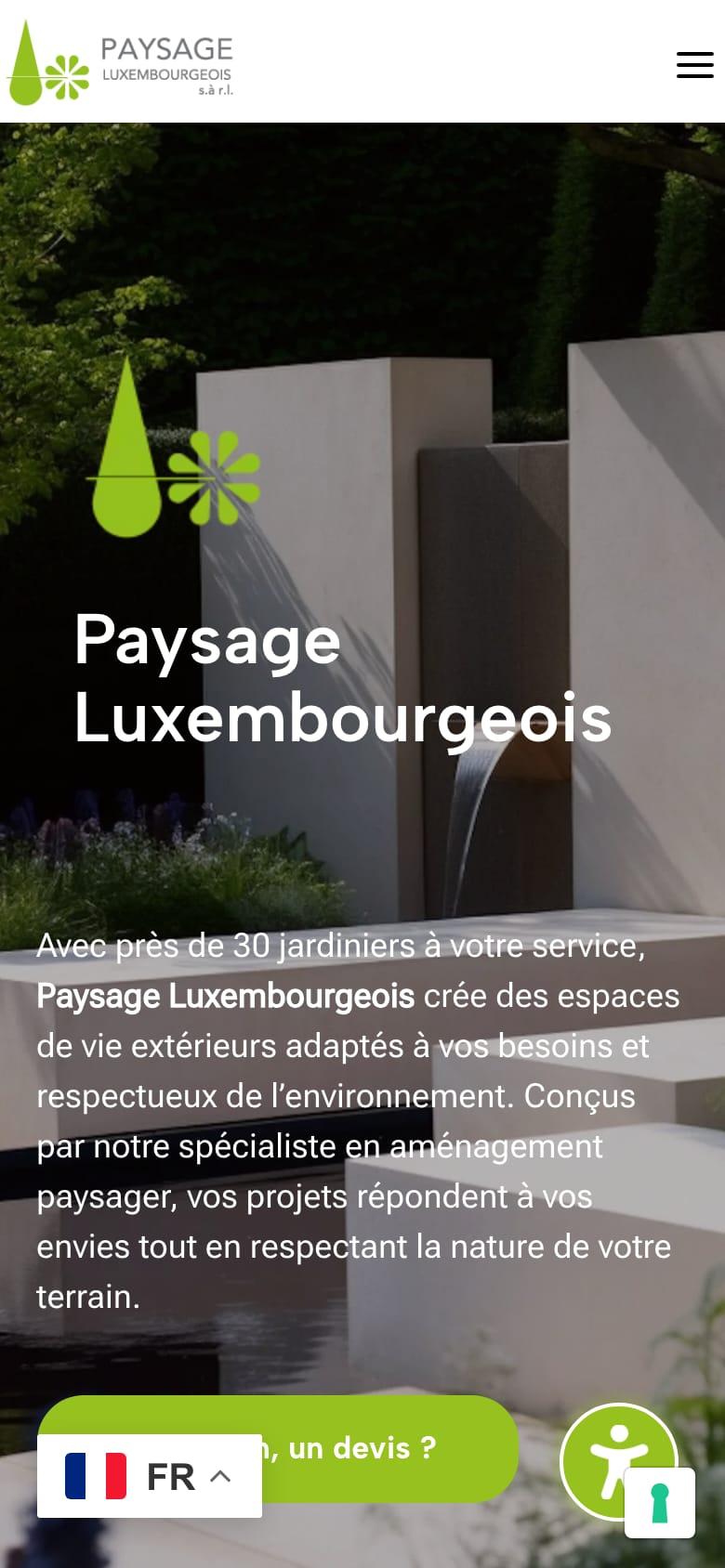
Paysage Luxembourgeois
landscaper for private customers and local authorities: website, SEO and advertising.
Visit paysagelux.lu (new tab)Our other projects are on our case studies page.
Frequently asked questions
SEO is about your place in Google’s results. GEO is about the way AI assistants talk about you in their answers. For Google, it is the same work: its AI features rely on its usual ranking systems. For the other assistants, a few extra points matter, such as their crawlers’ access to your website. The full explanation is in our guide What is GEO?
Nobody can guarantee it. What we can do: check that ChatGPT is allowed to read your website (OpenAI asks you to allow its OAI-SearchBot crawler), that your information is clear and identical everywhere, and that your business is present where people talk about your trade. After that, it is up to the assistant.
Not to be visible. Google ignores it, and the Ahrefs study of June 2026 shows that these files are almost never read. If your website has one, it should at least be accurate.
The crawlers used for search, yes, if you want to be cited: blocking OAI-SearchBot removes you from ChatGPT search answers. The crawlers used to train AIs (GPTBot at OpenAI, ClaudeBot at Anthropic, Google-Extended at Google) are a separate choice. Google states that Google-Extended changes nothing in Google Search.
Google’s AI summaries exist in Luxembourg in French, German and English, so your customers may already be seeing them. We cannot tell you how many of them use an AI. The baseline check at least shows you what the AIs say about your business today.
A one-off baseline check and regular follow-up don’t take the same time: every request is quoted individually, after a first conversation.
No assistant gives an official timeframe. On Google’s side, it moves at the pace of SEO: from a few hours to several months, depending on the change. On ChatGPT’s side, OpenAI says a change to crawler access takes about 24 hours to be reflected in its search. What the assistant then says about you depends on what it finds on the web.
To be checked together. The official page talks about creating or improving a website; AI is not mentioned. Full details of the grant: SME Packages Digital.
Contact
Let’s talk about your visibility
Tell us your trade and your area. We will explain what is useful in your case, and what isn’t. You can also ask for a free audit of your online presence.
 wedo.lu, the digital initiative of the Fédération des Artisans
 Made in Luxembourg label
 Provider for the SME Packages programme